
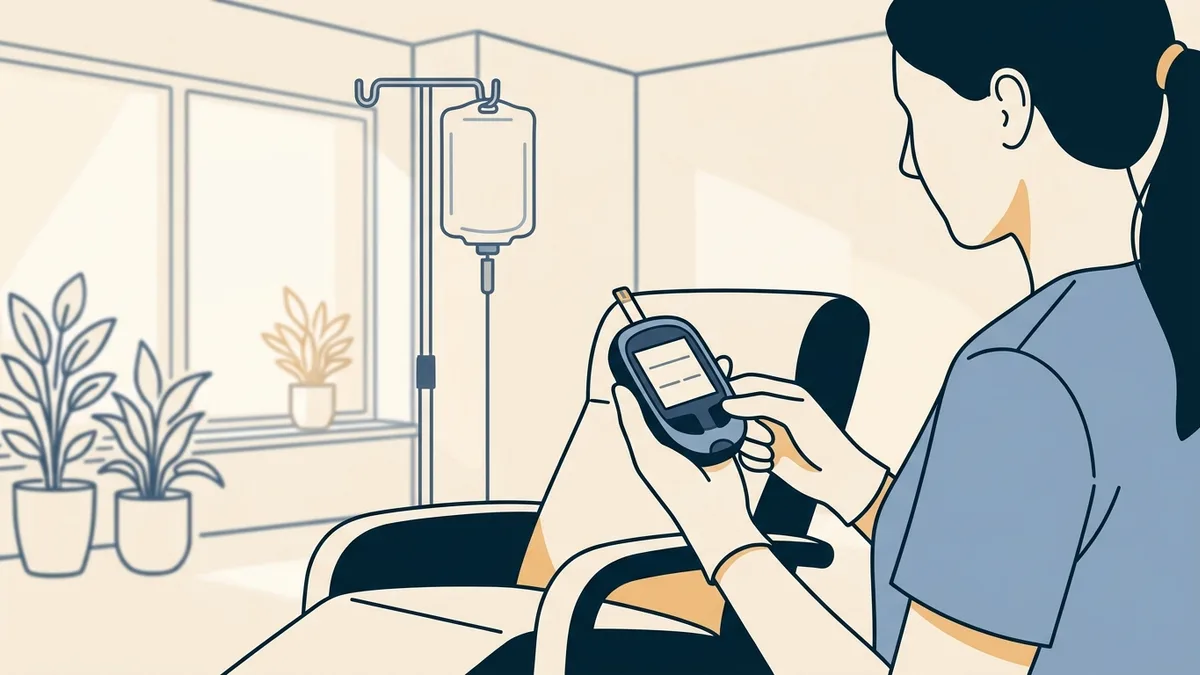
A med spa or IV clinic needs a CLIA certificate if its staff perform any test, such as a urine pregnancy test before a treatment or a fingerstick glucose before an infusion. A clinic that only draws blood and sends it to an outside lab is a collection site, not a lab. Most need only a Certificate of Waiver.
Med spas and IV hydration clinics rarely think of themselves as laboratories. Many of them are, at least under federal law, because of one or two quick tests they run before a treatment. A urine pregnancy test before a laser or injectable treatment, or a fingerstick glucose before an infusion, is an examination of "materials derived from the human body" for "the assessment of the health of" a person, which is how 42 CFR 493.2 defines laboratory work.
CLIA applies "even if only one or a few basic tests are performed, and even if you are not charging for testing," and "WAIVED TESTS ARE NOT EXEMPT FROM CLIA" (Form CMS-116 instructions). If staff run the test and act on the result, the location needs a certificate.
When is a med spa or IV clinic a laboratory?
When it performs a test, not when it only collects a specimen. The definition draws the line itself: "Facilities only collecting or preparing specimens (or both) or only serving as a mailing service and not performing testing are not considered laboratories" (42 CFR 493.2). CMS's State Operations Manual lists "Facilities which serve only as collection stations" among those not subject to CLIA (Chapter 6, section 6002).
- Needs a certificate: a nurse runs a urine pregnancy cassette, a glucose meter, a hemoglobin meter or a dipstick, and the result decides whether or how the client is treated.
- Does not need its own certificate: the clinic draws blood for a hormone or nutrient panel and ships it to a reference lab, which performs the test under its own certificate.
- Outside CLIA: the client tests themselves at home with an FDA home-use test. CMS says such a test "is not regulated under CLIA when that test is self-administered" under its labeling. If your staff perform or read it, it is back inside CLIA.
Which certificate fits?
Almost always a Certificate of Waiver. Urine pregnancy tests by visual color comparison, home-use glucose monitoring devices and single-analyte hemoglobin instruments are on the original federal list of waived tests (42 CFR 493.15(c)), and FDA categorizes newer kits in its CLIA database. Confirm each kit you buy, and use it exactly as its instructions say: CMS warns that a kit used "off-label," meaning "not used as per the IFU, or if the IFU are modified," defaults to high complexity. See off-label use of waived tests.
The current CMS fee for a Certificate of Waiver, as of October 2026, is $248 every two years. The clinic pays it on pay.gov after CMS emails the fee coupon to the address on the CMS-116.
What should a med spa put on the CMS-116?
- Facility type. Section III lists 29 types, and none is a med spa or IV clinic. Pick the most descriptive one and ask your State Agency if unsure.
- Director. A waiver lab has no federal director qualifications, but the form asks for a director's name and credentials. Many med spas name their medical director. State law may require more.
- Physical address. The treatment location where testing happens, never a P.O. box.
- Test table. Each analyte, test name and manufacturer, and the estimated annual volume.
The owner or director signs the form, which carries the lab's consent to inspection. Waiver labs are "not routinely surveyed," but CMS may inspect at any time during testing hours to investigate a complaint or check whether a lab is testing beyond its certificate (42 CFR 493.1775). Our CMS-116 guide covers each section.
What about mobile IV services and multiple locations?
A med spa brand with several studios needs a certificate at each one. A for-profit group fits none of the three exceptions that allow one certificate for several sites. Mobile IV services are different: labs "that move from testing site to testing site, such as mobile units... or other temporary testing locations may be covered under the certificate of the designated primary site or home base" (42 CFR 493.35(b)(1)). If nurses run a glucose test in clients' homes or at events, the home base certificate can cover that, with the temporary testing sites described on the CMS-116. See mobile units and temporary testing sites.
Which state rules catch med spas?
State lab laws often exempt physician practices and leave other ownership models covered. Two examples from the statutes:
- Maine exempts physicians, physician associates, family nurse practitioners, rural health clinics and group practices testing only their own patients (22 M.R.S. 2013-A). A med spa that does not fit those categories falls under the Maine Medical Laboratory Act. See Maine.
- California requires every lab doing waived tests to register with the state, at each location (Bus. & Prof. Code 1265). See California.
Check your state before the first test on the state requirements index. Ownership and supervision rules for med spas themselves (who may own the practice, who must supervise injections and infusions) come from medical and nursing practice law, not CLIA, and are outside what we handle.
How do we help a med spa or IV clinic?
A $149 Readiness Review answers the threshold question first: are you testing, or only collecting? If you need a certificate, our Certificate of Waiver Application is $399 per location, or $549 with a compliance binder built around CDC's waived testing guidance, and state registrations are $299 per state. We prepare everything; your owner or director signs, and your clinic pays CMS and the state directly.
Common questions
- Does a pregnancy test before an injectable treatment require a CLIA certificate?
- If your staff run the test, yes. A visual urine pregnancy test is a waived test, and waived tests are not exempt from CLIA. A Certificate of Waiver covers it.
- We only draw blood and send it to a reference lab. Do we need CLIA?
- Not for that. Federal rules say facilities that only collect or prepare specimens are not laboratories. The reference lab tests under its own certificate. Some states regulate collection sites separately.
- Does a mobile IV service need its own CLIA certificate?
- Testing done at clients' homes or events can be covered under the certificate of the home base, using its address, under the mobile and temporary testing exception.
Need Help with Your CLIA Certificate?
We prepare your CMS-116 and any state filing for your owner or director to sign, then track your certificate, changes and renewals.