
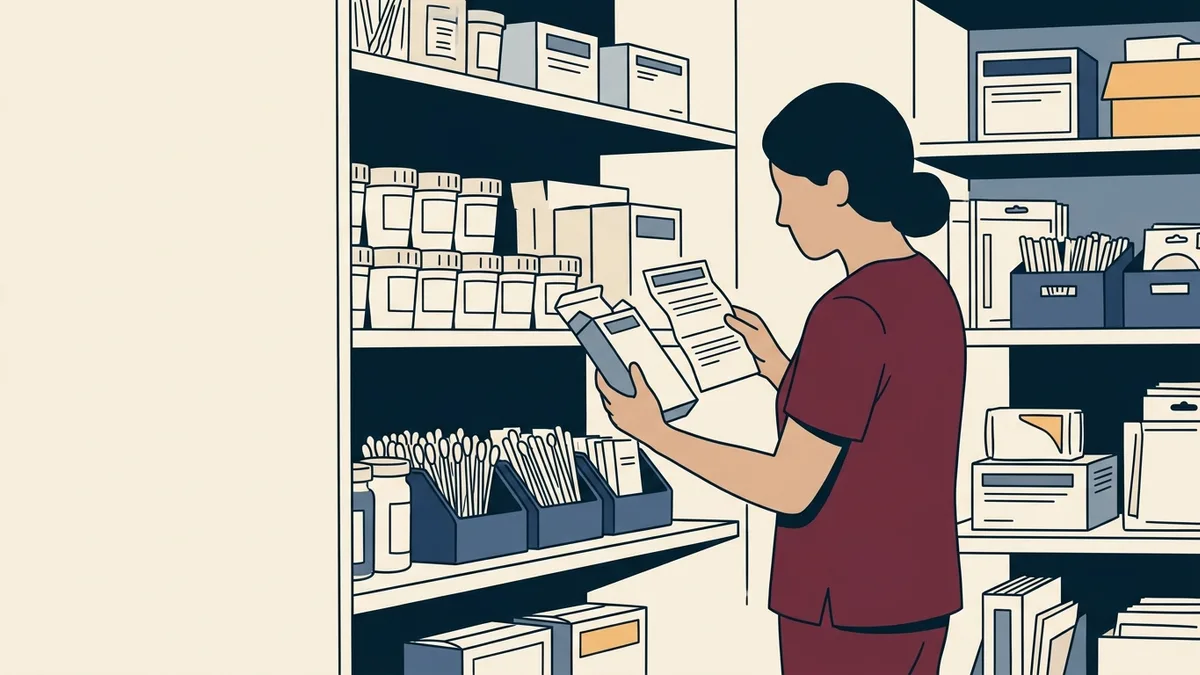
Look up the exact product in FDA's CLIA database, searching by test system name or manufacturer, and read the complexity listed for that system and version. Waiver attaches to a test system, not an analyte. Use the kit exactly as its instructions say: off-label use defaults the test to high complexity.
Before a waiver lab adds a test, someone has to answer a simple question: is this exact test waived? It is easy to get wrong, because CLIA categorizes test systems, not conditions or analytes. The same analyte, glucose or hemoglobin A1c for instance, can be measured by a waived system in one clinic and by a moderate or high complexity system in the lab down the street. The answer lives in FDA's CLIA database, and in the package insert of the kit you actually buy.
Who decides that a test is waived?
HHS decides whether a test meets the waiver criteria in 42 CFR 493.15(b), and FDA does the categorization. A test system qualifies if it:
- is "cleared by FDA for home use";
- uses "methodologies that are so simple and accurate as to render the likelihood of erroneous results negligible"; or
- poses "no reasonable risk of harm to the patient if the test is performed incorrectly."
FDA's waived analytes page describes three routes to waiver: "any test listed in the regulation," any test system whose manufacturer applies and "provides scientifically valid data verifying that the waiver criteria have been met," and "test systems cleared by the FDA for home use."
What is on the original 1992 list?
The regulation itself names the starting set at 493.15(c): non-automated dipstick or tablet urinalysis, non-automated fecal occult blood, visual ovulation tests, visual urine pregnancy tests, non-automated erythrocyte sedimentation rate, copper sulfate hemoglobin, blood glucose by meters cleared for home use, spun microhematocrit, and hemoglobin by single-analyte instruments. Everything else that is waived today, from rapid strep to molecular flu, was added through categorization of individual test systems.
How do you search FDA's CLIA database?
FDA's CLIA database lets you search by test system or manufacturer, analyte name, document number, complexity (high, moderate or waived), specialty and effective date. A practical routine:
- Start from the box. Write down the exact product name and manufacturer from the package insert, and note the specimen type it lists.
- Search the test system name. Enter a single word or the exact phrase. Matching the product name matters more than matching the analyte.
- Read the complexity column for that system. Many products have several entries for different versions, readers or specimen types. Make sure the line you rely on matches what you will run.
- Filter by "Waived" when browsing. Use the analyte drop-down with the complexity filter to see every waived system for, say, group A strep, then compare it with what your distributor offers.
- Save a copy. Keep a printout or PDF of the categorization with your test records. It answers the first question an inspector or new staff member will ask.
FDA also publishes a "Currently Waived Analytes" page that lists analytes linked to waived systems, from group A strep and influenza A/B to glycosylated hemoglobin and urine hCG. Treat it as a starting point. An analyte appearing there means at least one system for it is waived, not that every system is.
Why does a waived test sometimes stop being waived?
Because the way you use it counts. CMS's home testing FAQ says that if a kit is used "off-label" (not used per its instructions, or with modified instructions), "the test complexity defaults to high complexity." Running a nasal-swab test on a throat swab, extending a read time, or using a home-use kit under a professional workflow its labeling does not describe are the usual ways it happens. A waiver lab cannot perform high complexity testing, and 42 CFR 493.15(e)(1) requires it to "follow manufacturers' instructions for performing the test." See off-label use turns a waived test into high complexity.
Two other defaults from the same FAQ are worth knowing. "Any test that has not been categorized is considered high complexity by default." And point-of-care tests authorized under an emergency use authorization "are deemed to be CLIA waived tests while the EUA is in effect," with the authorized settings listed in FDA's EUA tables rather than the CLIA database.
How do new waived tests reach billing?
When FDA waives a new test system, CMS issues a change request so Medicare contractors recognize it. For example, Transmittal 13465 (CR 14273, November 14, 2025) added two codes effective January 1, 2026: 87494QW for a chlamydia and gonorrhea nucleic acid test and 87812QW for a visual COVID-19 and influenza A and B antigen test. The transmittal says these codes "must have the modifier QW to be recognized as a waived test." Our posts on waived tests new in 2026 and the QW modifier go further.
What should go on the CMS-116 once you know?
Section VI of the CMS-116 asks for each analyte or test, the test name and the manufacturer, with one estimated annual volume for all waived tests. The form's own example is a group A strep test listed by product name and maker. Build that table from the categorizations you saved. If you add a waived test after your certificate is issued, update your records; if you add anything that is not waived, the State Agency must hear before you perform it (493.39(a)). See adding tests to your menu.
Can White Glove CLIA check a test menu?
Yes. In a CLIA Readiness Review ($149, credited toward a filing) we check each kit on your menu against FDA's categorization, flag anything that would need PPM or a nonwaived certificate, and note any state add-on. The Certificate of Waiver Application ($399 per site) includes the Section VI test table built from your package inserts. The owner or director reviews and signs the CMS-116. For the full process, read the Certificate of Waiver, start to finish.
Common questions
- Where can I find the official list of CLIA-waived tests?
- FDA's CLIA database, searchable by test system, manufacturer, analyte and complexity. FDA also posts a Currently Waived Analytes page. The original regulatory list is at 42 CFR 493.15(c), but most waived tests were added later by categorization.
- If an analyte is on the waived list, is every test for it waived?
- No. Categorization belongs to the specific test system. An analyte appears on FDA's waived analytes page when at least one system for it is waived; other systems for the same analyte can be moderate or high complexity.
- What happens if we use a waived test differently from its instructions?
- CMS's home testing FAQ says off-label use makes the test default to high complexity. A Certificate of Waiver lab cannot perform high complexity tests, so off-label use puts the lab outside its certificate.
- Is a test that FDA has not categorized considered waived?
- No. CMS says any test that has not been categorized is considered high complexity by default.
Need Help with Your CLIA Certificate?
We prepare your CMS-116 and any state filing for your owner or director to sign, then track your certificate, changes and renewals.